Blog

  • Connecting

    Connecting

    The three stanzas from today’s Stress Free Zone highlight different aspects of spirituality, emphasizing the diverse ways individuals perceive and connect with a higher power or spiritual understanding.

    The first stanza acknowledges that some people have a clear and specific sense of a God or Higher Power. Indicating a more defined belief system. It reflects a traditional approach to spirituality, where individuals have a specific concept of the divine that guides their thoughts, actions, and understanding of the world. On the other hand, it acknowledges that not everyone has a clear understanding of this Power. Leaving their minds open to the possibility of discovering more about it in the future. This perspective reflects a more open-minded and flexible approach to spirituality, allowing for personal growth and evolving beliefs.

    The second stanza explores the transformative power of spirituality. It suggests that spiritual sensibilities enables individuals to live life to its fullest. Fostering a sense of gratitude for one’s self and life experiences. It implies that through spiritual connection, individuals find a sense of purpose, fulfillment, and contentment. The stanza also expresses that this way of life surpasses any previous experiences. Indicating that spiritual growth and connection can bring a higher level of fulfillment and satisfaction than anything known before. The mention of “each day more will be revealed” suggests that spirituality is an ongoing journey of discovery and deepening understanding.

    The third stanza, quoted from James Redfield, emphasizes the importance of connection within spirituality. It suggests that all religions strive to cultivate a spiritual sensibility. Emphasizing the universal human need for connection with something greater than ourselves. This perspective highlights that spirituality transcends specific religious doctrines and rituals. Emphasizing the underlying principle of connection to a higher power, to others, and to oneself. It suggests that true spirituality lies in fostering these connections, regardless of the particular religious framework one follows.

    In summary, today’s Zonr post portrays spirituality as a multifaceted concept, encompassing both personal beliefs and open-mindedness. They emphasize the transformative power of spiritual sensibilities, their ability to bring fulfillment and gratitude, and the significance of connection in spiritual experiences. Together, they highlight the diverse ways individuals perceive and engage with spirituality, encouraging ongoing exploration and personal growth in this realm.

  • YOLO

    YOLO

    The “seize the day” philosophy, often associated with the saying “you only live once” (YOLO), applies direct to today’s Stress-Free Zone. This philosophy encourages individuals to make the most of each moment, embrace opportunities, and live life to the fullest. Let’s explore how it relates to the quotes.

    The first stanza emphasizes that the only requirement for membership is a desire to stop using drugs or alcohol. It reflects the “seize the day” philosophy by acknowledging that individuals who want to overcome addiction should embrace the opportunity to seek help and start a new chapter in their lives. By recognizing their desire for freedom from addiction, they seize the day by taking the necessary steps to improve their well-being and find support.

    The second stanza affirms that no matter how low someone has fallen, they are warmly welcomed in recovery programs like Alcoholics Anonymous (AA). This aligns with the “seize the day” philosophy by emphasizing the inclusivity and acceptance of individuals regardless of their past actions or emotional complications. It encourages individuals to seize the opportunity for redemption, personal growth, and transformation, regardless of their circumstances or mistakes.

    The third stanza with a quote by James Dean suggests living each day as if it were the last. It embodies the “seize the day” philosophy by encouraging individuals to embrace life’s possibilities and make the most of every moment. It implies that by living with a sense of urgency and appreciation, one can fully experience and enjoy life, avoiding regrets and taking advantage of opportunities that come their way.

    Applying the “seize the day” philosophy to today’s Zonr post, we see a common thread of embracing the present moment, making positive changes, and pursuing personal growth and fulfillment. It encourages individuals to seize the opportunity for recovery, regardless of their past, and approach life with a sense of purpose and enthusiasm. By embracing the philosophy of living fully in the present moment, individuals can find motivation, hope, and inspiration to make positive changes, pursue their dreams, and find meaning and fulfillment in their lives.

  • Hamony, Wisdom and Virtue

    Hamony, Wisdom and Virtue

    The tenets of Confucianism can provide insights into the recovery wellness themes present in the today’s Stress-Free Zone. Confucianism places great emphasis on self-cultivation, virtues, ethical behavior, and the pursuit of moral excellence. Let’s explore how Confucian principles align.

    The first stanza emphasizes the importance of individual willingness to look within. In Confucianism, self-reflection is a key aspect of self-cultivation. Confucius teaches that individuals should engage in introspection, examining their thoughts, actions, and motives to cultivate virtuous qualities. This aligns with the idea that one must be willing to look within oneself to initiate personal growth and transformation.

    The second stanza highlights the need for determination, time, and courage to effect change. Confucianism promotes the concept of self-improvement through continuous learning and moral development. It emphasizes the cultivation of virtues such as benevolence, righteousness, and wisdom. The courage to change implies the willingness to confront one’s flaws, overcome personal challenges, and strive for moral improvement, all of which resonate with Confucian ideals.

    Confucius’ teaching, as mentioned in the third and final stanza, encourages individuals to compare themselves with others for the purpose of self-reflection. This principle aligns with the Confucian concept of “li,” which refers to proper behavior and social norms. According to Confucian teachings, one should aspire to emulate and learn from those who possess superior qualities and virtues. Simultaneously, when encountering individuals who may not exhibit the same level of moral conduct, one is encouraged to reflect inwardly, examining one’s own actions and character.

    In Confucianism, the path to self-improvement involves the cultivation of virtues through ethical conduct, filial piety, respect for others, and the practice of rituals. Confucius emphasized the importance of moral character, social harmony, and the cultivation of relationships based on empathy and compassion. These principles resonate with the recovery wellness themes found in the Zonr post. Emphasizing the need for self-reflection, determination, courage, and the pursuit of moral excellence.

    Overall, the tenets of Confucianism provide a framework for understanding the themes of recovery wellness conveyed in today’s Zonr post. The teachings of Confucius, focused on self-cultivation, moral improvement, and harmonious relationships, align with the principles of willingness to look within, the courage to change, and the importance of self-reflection in personal growth and recovery. By embracing Confucian ideals. Individuals can draw inspiration from the teachings of ethical conduct and strive for personal betterment in their recovery journey.

    Click here to receive your own free daily recovery wellness posts with solutions you can count on. And support the ATC!

  • No Pain, No Gain?

    No Pain, No Gain?

    The question of why a loving Higher Power would create a world filled with suffering, hunger, hate, and disease is a bit more complex than “no pain, no gain. ” And definitely a matter of spiritual wellness. It is important to note that the following reasoning is theoretical. Which does not provide a definitive answer, but rather offers a perspective within the context of today’s Stress-Free Zone.

    Firstly, the quote from Marijunana Anonymous’ Life with Hope suggests that the existence of war, brutality, poverty, and disease is not the result of a divine plan. But rather the consequence of human actions. It places the responsibility for the horrors of the world on people, not on a loving Higher Power. This perspective suggests that God or the Higher Power did not intentionally create a world of suffering. But instead granted humans free will, allowing them to make choices that have led to these hardships.

    Then quoting from Overeaters Anonymous, we highlight the idea that the concept of a Higher Power is open to personal interpretation. It recognizes that individuals have different beliefs and allows them to define their Higher Power in a way that resonates with them personally. This perspective suggests that the existence of suffering in the world may not be a direct reflection of a Higher Power’s intentions. But rather a consequence of the imperfect nature of human understanding and the diversity of individual beliefs.

    Drawing from the quote by Kahlil Gibran. It suggests that God or the Higher Power has provided multiple paths or “doors” for individuals to seek and find truth. This implies that different perspectives and experiences are part of the divine plan. And through these diverse paths, individuals can come to know and understand truth in their own way. In this context, suffering may be seen as an opportunity for growth, learning. And the exploration of different dimensions of existence.

    In a theoretical framework. It can be argued that a loving Higher Power created a world with the potential for suffering to allow for the development of compassion, empathy, and the appreciation of joy and happiness. Through experiencing hardship, humans are given the opportunity to cultivate virtues and qualities that contribute to personal growth, resilience, and the betterment of society. This perspective suggests that the existence of suffering serves as a contrast. In order to appreciate the moments of love, kindness, and beauty that also exist in the world.

    It is essential to acknowledge that these are philosophical perspectives attempting to address a profound and complex question. Different individuals and belief systems may offer alternative explanations. Ultimately, the understanding of why a loving Higher Power would allow suffering in the world is subjective and deeply personal. Influenced by personal experiences, faith, and interpretation of spiritual teachings.

    Click here to receive your own free Zonr daily spiritual wellness solutions you can count on. And support the ATC!

  • Juneteenth

    Juneteenth

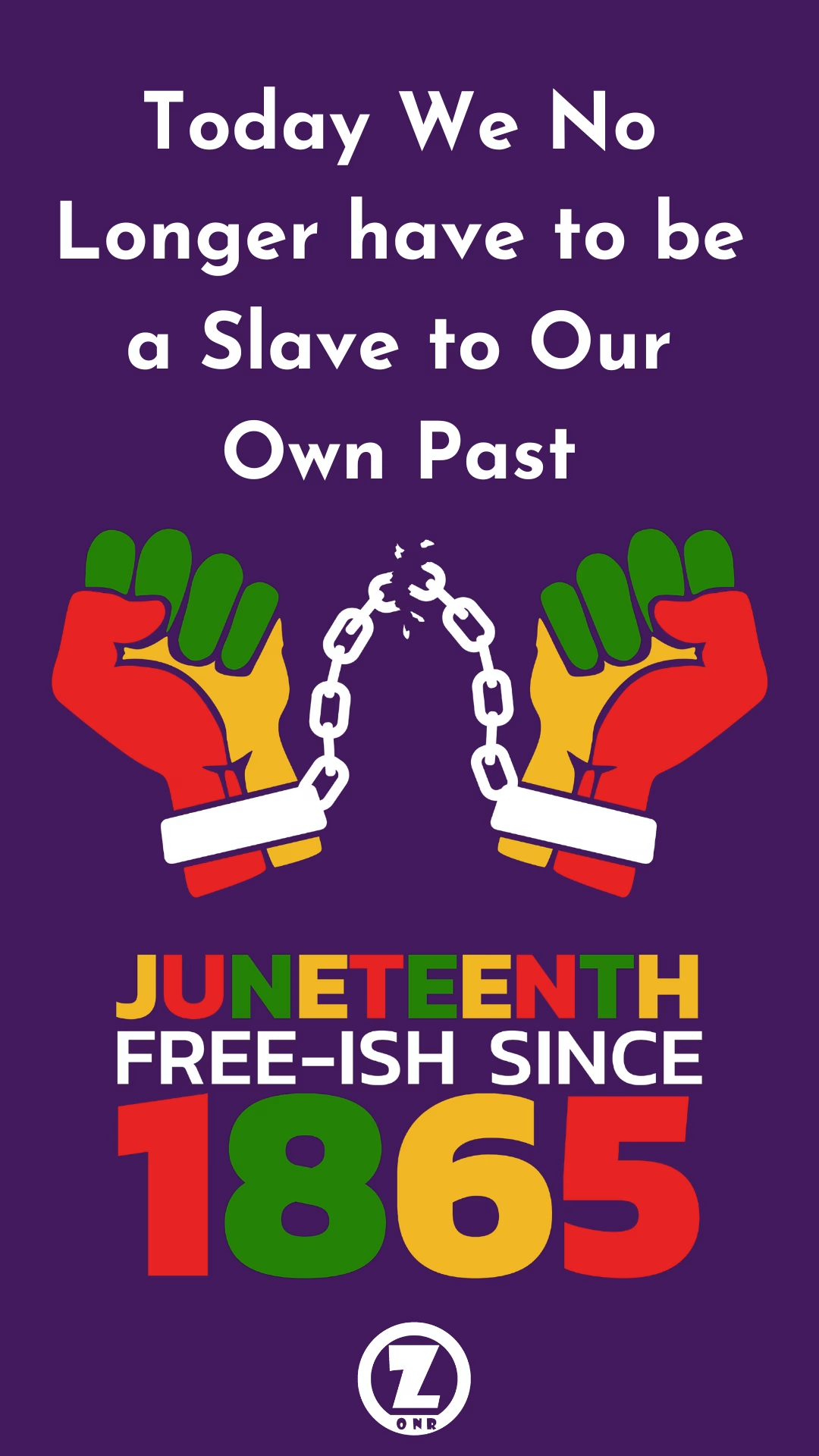
    Juneteenth holds significant historical and cultural importance as it commemorates the emancipation of enslaved African Americans in the United States. It marks the day when Union Army General Gordon Granger and 2,000 federal troops arrived to formally retake the port of Gaveston, TX. And proclaimed that the enslaved Black and African American people of Galveston and Texas – about a quarter of a million people – that the Emancipation Proclamation had freed them. Where, for two years, Southerners found a safe haven to hold onto their slaves. Today’s Stress Free Zone for explores the history and meaning of Juneteenth within a recovery wellness context:

    We begin with a quote from MA’s Life with Hope. Which describes the experience of addiction and the feeling of being prisoners of one’s own mind. It draws a parallel to the historical context of Juneteenth. Where enslaved African Americans were also held captive, physically and mentally. Juneteenth reminds us of the significance of liberation, breaking free from bondage, and reclaiming autonomy and self-worth. It parallels the journey of individuals who have struggled with addiction. Seeking freedom from the chains of substance abuse and reclaiming their lives.

    The next quote AA’s Big Book, introduces the Third Step Prayer. Which is a cornerstone of recovery programs like Alcoholics Anonymous. It acknowledges the need to surrender the ego and the bondage of self. In the context of Juneteenth, it resonates with the notion of releasing the psychological and emotional shackles of slavery. And embracing a new sense of self and purpose. The prayer emphasizes the willingness to align one’s will with a higher power and find guidance and strength in a journey towards personal transformation and freedom.

    And the final third quote by Ralph Waldo Emerson encourages individuals not to be bound by their past. To embrace personal growth and progress, and to embark on a journey of self-discovery and recovery wellness. It reflects the spirit of Juneteenth. Which is not only about celebrating freedom from physical bondage. But also about acknowledging the resilience, strength, and capacity for personal growth and advancement. It encourages individuals to explore new experiences, challenge old narratives, and gain a deeper understanding of themselves and their history.

    Juneteenth serves as a reminder of the struggles and sacrifices endured by enslaved African Americans. As well as a celebration of their resilience and perseverance. It provides an opportunity to reflect on the progress made towards equality and justice. While demanding we take action against systemic racism and implement the work that still needs to be done. Juneteenth celebrations often include gatherings to discuss what the community can do today. Along with, parades, music, food, and educational events. To honor the heritage and contributions of African Americans and foster a sense of unity and shared history.

    In conclusion, Juneteenth is a significant observance that commemorates the emancipation of enslaved African Americans and symbolizes the ongoing struggle for equality and freedom. It represents the journey from captivity to liberation, both historically and metaphorically. And calls for reflection, celebration, and continued efforts towards justice and inclusivity. Juneteenth serves as a reminder that the fight against oppression and the quest for equality is a collective responsibility. And an ongoing process of growth, understanding, and action to right the horrific wrongs of the past.

    Click here to receive your own free daily recovery wellness posts with solutions you can count on. And support the ATC!

  • Recovery Wellness Relief

    Recovery Wellness Relief

    The spiritual approaches outlined in today’s Stress-Free Zone focuses on recovery and wellness by seeking a higher power, surrendering difficulties, and relieving distress. Let’s compare these practices with the teachings of two renowned spiritual leaders: Thich Nhat Hanh and Eckhart Tolle.

    Thich Nhat Hanh is a Vietnamese Buddhist monk, peace activist, and renowned spiritual leader. His teachings emphasize mindfulness, compassion, and interconnection. In the context of recovery wellness, Thich Nhat Hanh’s teachings align with the spiritual approaches mentioned in the quotes.

    Thich Nhat Hanh encourages individuals to cultivate mindfulness, which involves being fully present and aware in each moment. By practicing mindfulness, individuals can develop a deeper understanding of their cravings, attachments, and sources of suffering. This awareness allows them to recognize the pain of living without addictive substances or behaviors, as described in the first quote. Thich Nhat Hanh teaches that by embracing this pain and seeking a higher power. Individuals can tap into their inner resources and the interconnectedness of all beings. This seeking of a higher power aligns with the idea of finding relief through a Power greater than oneself.

    The Third Step Prayer, as mentioned in the second quote, reflects the surrendering of difficulties to a higher power. Thich Nhat Hanh teaches a similar principle of surrender, emphasizing the practice of letting go. He encourages individuals to release attachments, expectations, and desires that cause suffering. By surrendering these difficulties to the present moment, individuals can find peace, acceptance, and a sense of interconnectedness with all life.

    Eckhart Tolle is a spiritual teacher and author known for his teachings on presence, consciousness, and the power of now. His teachings also resonate with the spiritual approaches mentioned in the quotes.

    Tolle emphasizes the importance of being fully present in the present moment, free from identification with thoughts and the ego. This practice aligns with the first quote. As individuals in recovery learn to face the pain of living without drugs or addictive behaviors. By embracing the present moment and seeking a Power greater than themselves. Tolle teaches that by becoming aware of the pain and surrendering to the present moment. Individuals can transcend their identification with suffering and find relief in the deeper dimensions of consciousness.

    The Second Step Prayer, which seeks to relieve difficulties. And do the higher power’s will, resonates with Tolle’s teachings on the power of presence. He emphasizes that true power lies in surrendering to what is and aligning with the intelligence of the present moment. By accepting difficulties and surrendering the need for control. Individuals can tap into the transformative power of the present moment and align with the greater flow of life.

    In summary, the spiritual approaches discussed in the provided in today’s Zonr post align with the teachings of Thich Nhat Hanh and Eckhart Tolle. All emphasize seeking a higher power, surrendering difficulties, and finding relief through presence, acceptance, and interconnectedness. These practices in recovery wellness guide individuals to transcend the limitations of the ego, tap into inner resources. And find solace, peace, and a deeper understanding of their own nature. By embracing these teachings and practices, individuals can experience personal growth, healing, and a greater sense of well-being.

    Click here to receive your own free daily recovery wellness posts with solutions you can count on. And support the ATC!

  • Father’s Day

    Father’s Day

    Father’s Day can be a complex and emotional day for those who have strained relationships with their fathers. Or have experienced the absence of a loving father figure in their lives. While the day is traditionally associated with celebrating and honoring fathers. It can evoke a range of emotions for individuals who have dealt with estranged fathers, alcoholic fathers, or the absence of a nurturing paternal presence. The recovery wellness themes embodied in today’s Stress-Free Zone can help us explore how best to navigate such treacherous emotional waters.

    The Zonr post begins with a quote from the Big Book. Highlighting the challenging realities some individuals face regarding their fathers. It acknowledges that not all relationships with fathers are filled with love and warmth. For those who have experienced difficult or abusive relationships, Father’s Day may bring mixed emotions. They may grapple with conflicting feelings of love, resentment, and confusion. It is essential for them to find ways to cope with these emotions. And seek support from trusted individuals or professional resources.

    Then while quoting from Life with Hope. We emphasize the significance of forgiveness in the process of healing and making amends. Forgiveness can be a difficult and deeply personal journey. Particularly for those who have experienced pain and neglect from their fathers. However, forgiving doesn’t mean forgetting or condoning hurtful actions; it is a personal choice to release resentment and find inner peace. On Father’s Day, individuals may reflect on their journey of forgiveness. And explore ways to heal and grow beyond the wounds of the past.

    The third quote by Marianne Williamson reminds us that forgiveness is not always easy. But it is necessary for finding peace. Father’s Day can serve as an opportunity to reflect on the power of forgiveness. And its potential for personal growth and healing. It acknowledges the pain caused by father figures who may have inflicted wounds. But it also highlights the transformative potential of letting go and finding peace within oneself.

    For those who don’t have a loving father in their lives. Father’s Day can be an occasion to celebrate the positive male role models and mentors who have supported them throughout their journeys. It can be an opportunity to honor individuals who have filled the void left by absent or troubled fathers and acknowledge their impact on their lives.

    Ultimately, the celebration of Father’s Day for individuals with strained relationships or absent fathers is a deeply personal and unique experience. It can involve a range of emotions, including sorrow, healing, gratitude, and resilience. Each person navigates this day in their own way. Finding solace, support, and strength in their own individual paths towards healing, forgiveness, and personal growth.

    Click here to receive your own free daily recovery wellness posts with solutions you can count on. And support the ATC!

  • The Problem w/ “Contempt Prior to Investigation”

    The Problem w/ “Contempt Prior to Investigation”

    Contempt prior to investigation is a destructive mindset that sabotage’s recovery wellness. And leads to disastrous results when encountering the unknown. It blinds us to the richness of human diversity and perpetuates ignorance and discrimination. Prejudging individuals who are transgender, of a different race, or practice a different spiritual path exemplifies the consequences of this mindset.

    For example, when we approach individuals who are transgender with contempt prior to investigation. We deny ourselves the opportunity to understand their lived experiences and challenges. By making assumptions and refusing to engage in dialogue, we contribute to their marginalization and hinder progress towards inclusivity. It is only through genuine curiosity, empathy, and a willingness to learn that we can break down barriers and foster acceptance.

    Similarly, harboring contempt prior to investigation when encountering people of different races. This limits our ability to connect and appreciate their unique perspectives and contributions. Prejudice based on race has led to historical injustices and continues to perpetuate systemic inequalities. By allowing ourselves to be driven by preconceived notions and stereotypes. We overlook the richness and diversity that different racial backgrounds bring to our communities. Embracing a willingness to learn, engaging in meaningful conversations, and challenging our biases can lead to a more inclusive society that celebrates and uplifts all races.

    Contempt prior to investigation is also detrimental when it comes to different spiritual practices. Assuming superiority or dismissing other spiritual paths without understanding them fosters division and hinders personal growth. By allowing ourselves to be open to new ideas and experiences, we can expand our understanding of spirituality and connect with others on a deeper level. A willingness to explore different beliefs and engage in respectful dialogue can lead to mutual respect and unity.

    Maya Angelou’s quote in today’s Stress-Free Zone, reminds us of the dangers of allowing our ignorance to isolate us from others. Human existence is inherently intertwined. And isolation based on this invidious attitude leads to fractured communities and missed opportunities for growth. By recognizing our interconnectedness and embracing diversity. We can break free from the confines of ignorance and build a more harmonious world.

    In conclusion, contempt prior to investigation has disastrous consequences when encountering the unknown. It impedes our wellness recovery. Prejudging individuals who are transgender, of a different race, or practice a different spiritual path perpetuates ignorance and discrimination. To overcome this destructive mindset, we must cultivate a willingness to try something new, engage in respectful dialogue, and challenge our biases. By doing so, we foster understanding, promote inclusivity, and pave the way for a more compassionate and interconnected world.

    Click here to receive your own Stress -Free Zones for recovery welllness. SFZ’s are daily spiritual solutions you can count on. And you support the ATC to boot!

  • Put Aside the Thunderous Crack of the Whip

    Put Aside the Thunderous Crack of the Whip

    Maria was a young girl with a heart full of kindness and compassion. She had a special bond with her beloved pony, Mr. Whiskers. Together, they would explore the meadows, gallop through fields, and share moments of pure joy. However, there was one aspect of their relationship that troubled Maria – the use of the whip to make Mr. Whiskers obey her commands. Would wellness practices or corporal ones guide her decisions?

    One day, as Maria and Mr. Whiskers were venturing deeper into the forest, they encountered a treacherous storm. The wind howled, and thunder rumbled ominously in the distance. Fear crept into Maria’s heart as she saw the frightened expression on Mr. Whiskers’ face.

    Remembering the words from today’s Stress-Free Zone, Maria chose a different approach. Instead of resorting to the whip, she decided to use kindness and understanding to calm her pony. She dismounted and whispered soothing words, gently stroking Mr. Whiskers’ silky mane. She let him know that she was there for him, and that they would face the storm together.

    As Maria’s touch conveyed love and reassurance, Mr. Whiskers gradually calmed down. His racing heartbeat slowed, and his trembling legs found stability. Maria’s act of kindness had a profound effect on her loyal companion, creating a bond built on trust rather than fear.

    Suddenly, a bolt of lightning struck a nearby tree, splitting it in two. The loud crack echoed through the forest, startling both Maria and Mr. Whiskers. Without a moment’s hesitation, Mr. Whiskers sprang into action, galloping away from the dangerous area and swiftly carrying Maria to safety.

    It was in that heart-stopping moment that Maria realized the true power of kindness. By nurturing a relationship based on trust and compassion, she had forged a connection that extended beyond the ordinary. Her wellness approach to riding transformed fear into courage and uncertainty into unwavering loyalty.

    From that day forward, Maria discarded the whip entirely, relying solely on the power of kindness to guide and communicate with Mr. Whiskers. Their adventures continued, and their bond grew even stronger. Maria’s decision to replace force with love not only brought them closer but also influenced others who witnessed their remarkable connection.

    In this story, Maria’s use of kindness instead of the whip exemplifies the themes expressed in the provided quotes. Through her actions, Maria challenges the idea that force and coercion are necessary to achieve obedience. Instead, she embraces the power of compassion, understanding, and respect. By choosing kindness, Maria not only transforms her relationship with Mr. Whiskers but also experiences the unexpected rewards of trust, loyalty, and a deeper connection with her cherished pony.

    Click here to receive your own free Zonr daily spiritual solutions you can count on. And support wellness recovery at the ATC!

    How have you responded kindly to others lately?

  • The Importance of Being …

    The Importance of Being …

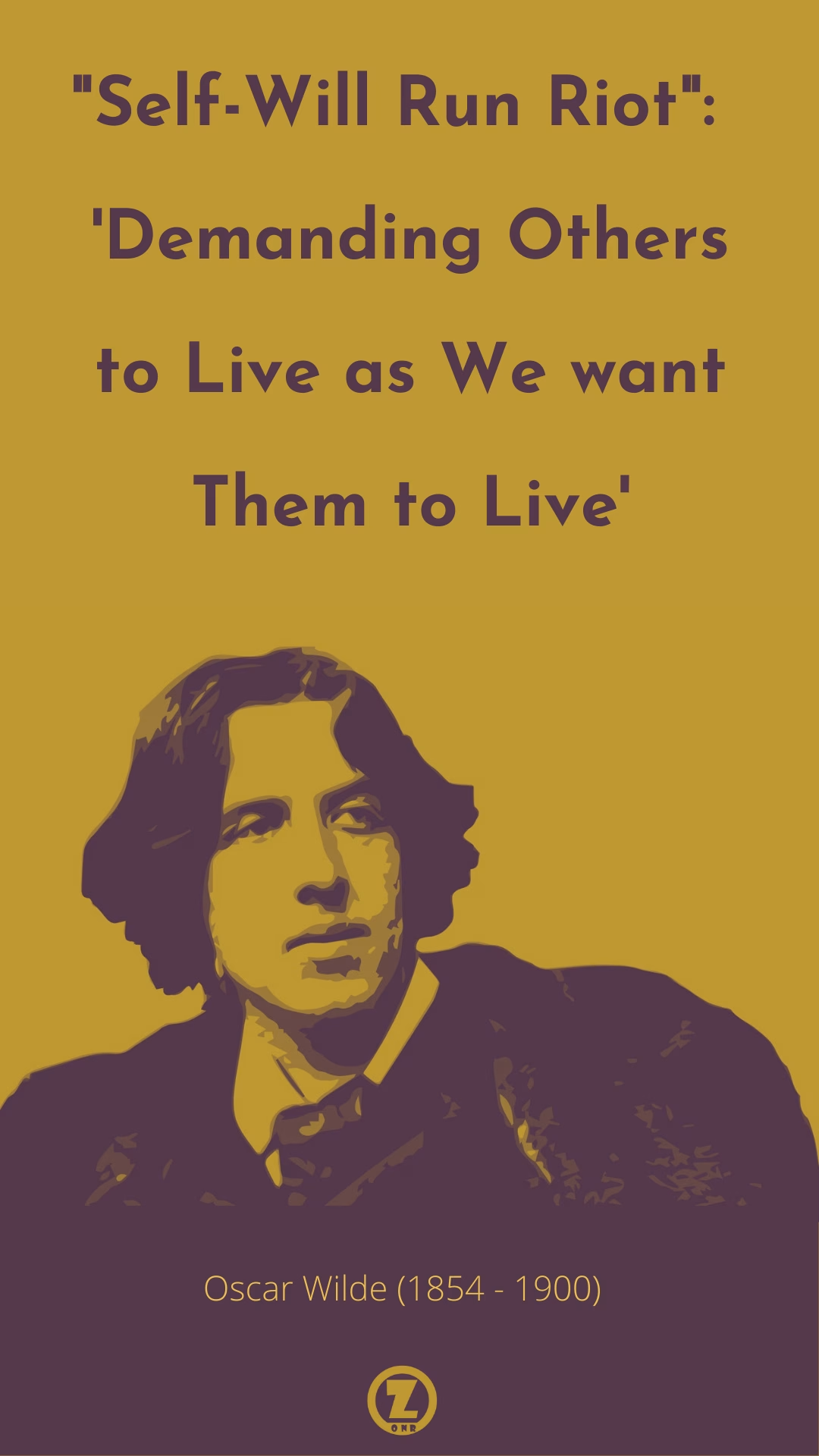
    While Oscar Wilde’s play “The Importance of Being Earnest” does not address today’s Zonr post directly. It does, however, explore themes of self-deception, societal expectations, and the pursuit of personal desires. By drawing upon excerpts from the play. We can expand on the underlying themes expressed in the three quotes. And shed light on the destructive nature of selfishness.

    In “The Importance of Being Earnest,” Wilde satirizes the upper-class society of his time. Highlighting the characters’ preoccupation with their own desires and their tendency to create elaborate facades. This aligns with the idea that troubles arise from within ourselves, as stated in the first quote. The characters in the play are trapped in their own self-deception,. Creating false identities and engaging in elaborate schemes to pursue their personal desires without regard for others.

    The character of Lady Bracknell exemplifies societal expectations as if she were wrapped in a “designer straight-jacket.” Mentioned in the second quote. She is a symbol of social conformity, emphasizing the importance of wealth, lineage, and propriety. Lady Bracknell’s obsession with societal norms limits the characters’ freedom and stifles their individuality. The play suggests that breaking free from these constraints is necessary for true happiness and fulfillment.

    Furthermore, the quote about selfishness resonates with the character Algernon’s behavior throughout the play. Algernon is portrayed as a self-indulgent and witty character who often puts his desires above all else. He lives a double life, creating fictional relatives and engaging in deceitful acts to pursue his own pleasures. Algernon’s actions exemplify the notion that selfishness is not just about living as one wishes, but also about imposing one’s desires on others.

    The play’s humor and wit serve as a critique of the superficiality and hypocrisy of the society it depicts. It underscores the destructive consequences of selfishness. As characters become entangled in a web of lies and deception, leading to misunderstandings and chaos. Ultimately, Wilde’s play exposes the flaws and illusions created by selfish behavior. And highlights the importance of sincerity, honesty, and genuine relationships.

    Although “The Importance of Being Earnest” does not directly address the concepts expressed in the provided quotes, it offers a satirical critique of societal norms and the self-centered pursuit of desires. Through the characters’ self-deception and pursuit of personal gratification, Wilde implicitly emphasizes the negative consequences of selfishness. By examining the play’s themes and character portrayals. We can further appreciate the underlying message about the ill effects of selfishness and the importance of breaking free from societal constraints.

    Click here to receive your own free Zonr daily spiritual solutions you can count on. And support the ATC!