Blog

  • Marathon Meeting NYE Topic Schedule

    Marathon Meeting NYE Topic Schedule

    The Speaker gets to pick either link associated with their time slot


    Step 12      12p   Must We be Condemned to Repeat the Past for All Eternity

    True “Courage is to Tell the Story of Who You Are with Your Whole Heart”*

    Step 1         1p     “We Are Miracles”* One and All

                   The Road to Recovery is Best Taken One Step at a Time

    Step 2         2p     “Rebellions Built on Hope”

    Why Intelligent People May Make Totly Insane Decisions

    Step 3         3p     Oh, What A Relief It Is

    Common Traits that Lead to Profound Spiritual Growth

    Step 4         4p     Our Self-Perceptions Warped Due to the ‘Fun House Mirror Effect’

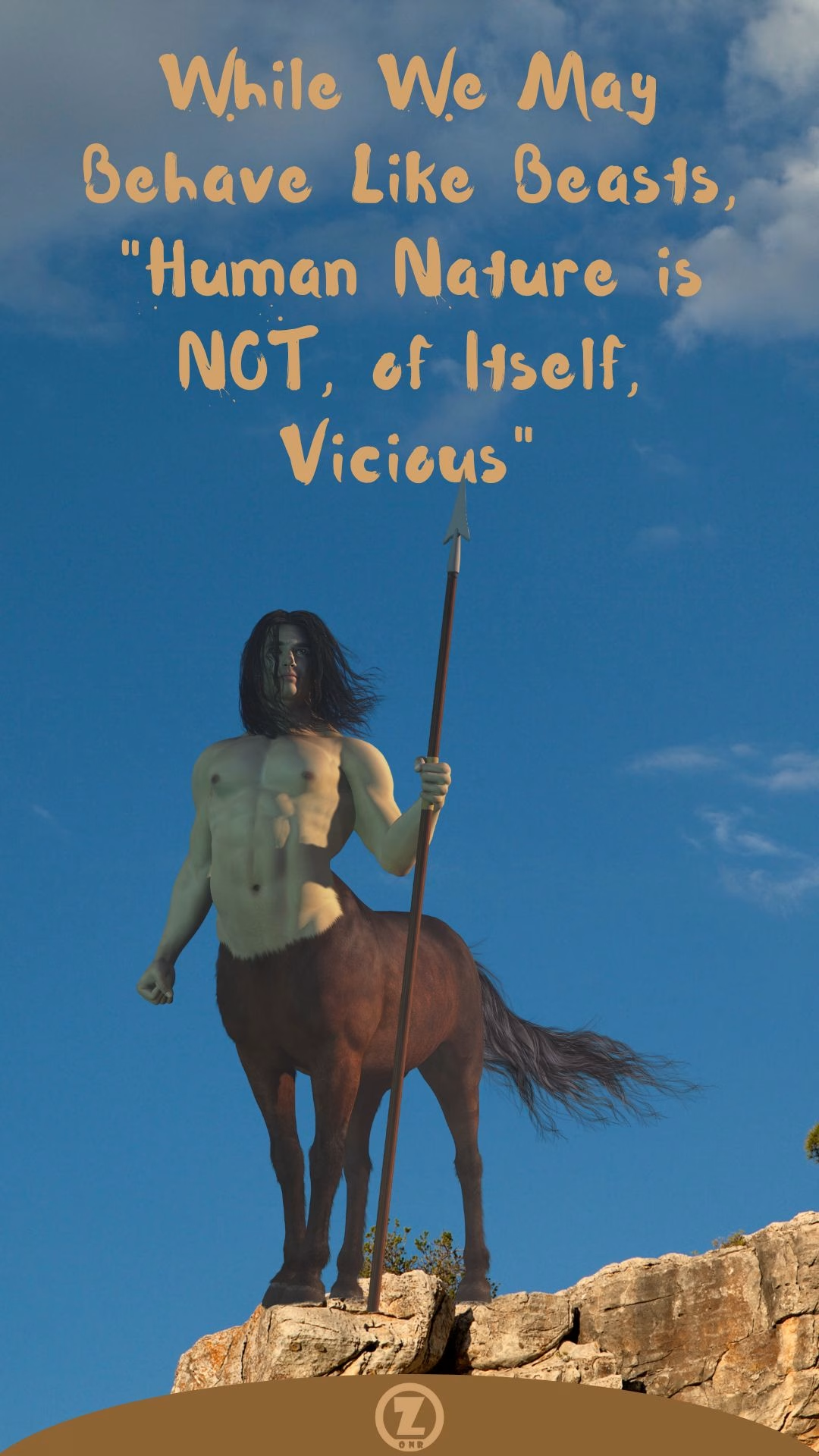
    While We May Behave Like Beasts, “Human Nature is NOT, of Itself, Vicious”

    Step 5         5p     Why “Guilt is a Rope that Wears Thin” Over Time

    Let’s Learn to Melt Away the Walls to Help them Come Tumbling Down

    Step 6         6p     Get Ready to be “Consumed by the Fire of ‘Ones’ Own Creativity”

    What it Takes to Experience the Loving Embrace of a Power Greater than Ourselves

    Step 7         7p     “I Believe in God, Only I Spell it, Nature.”

                                  Why Staying Out of the Results Reaps the Greatest Rewards

    Step 8         8p     “The Healthiest Emotion of All”

                                  Our “Shield against Calamity”

    Step 9         9p     Is it Really a Rose by Any Other Name

                                  Why No Man or Woman is an Island

    Step 10      10p   The Women’s March … Merging “Mercy with Might”  

    We shall either “Bloom like Flowers” in the Sun or …Ride Dark Clouds Astride Dangerous Winds

    Step 11p    11p   “The Sun is but a Morning Star”

    Why We might Want to Take Time to Meditate with Care Before Rushing to Pray in Haste

    Happy New Year!!!

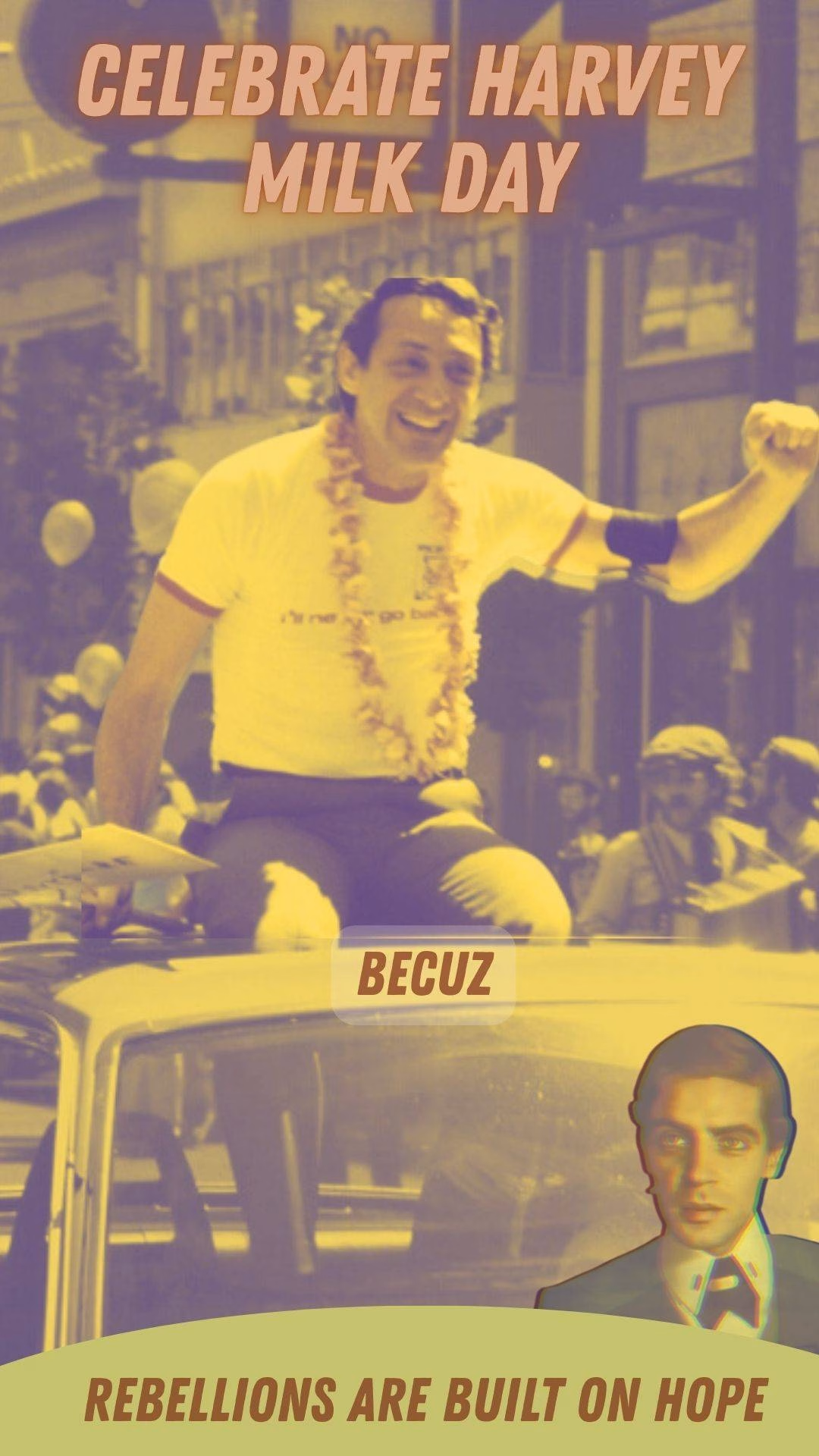
  • Celebrate Harvey Milk Day becuz ‘Rebellions are Built on Hope’

    Celebrate Harvey Milk Day becuz ‘Rebellions are Built on Hope’

    Analysis of today’s Stress Free Zone

    Today’s SFZ weaves together recovery, activism, and hope. The content aligns closely with the principles of individual empowerment, spiritual inclusivity, and radical compassion. These ideas echo themes in the works of Viktor Frankl, Thich Nhat Hanh, Carl Jung, and Harvey Milk himself.

    Recovery Dharma’s blessing—“May you be happy…free from suffering”—draws directly from Buddhist metta practice. Thich Nhat Hanh emphasized mindfulness and compassion as the ground of healing. These phrases serve not only as a personal intention but a collective aspiration, building inner strength for outward change.

    The AA Big Book reminds readers that our dreams can be transferred. Like Carl Jung’s teachings, it honors conscience and spiritual autonomy. Jung believed recovery required a spiritual awakening, and the text honors that transformation without forcing a singular path. The emphasis on personal conscience validates spiritual diversity.

    Harvey Milk’s quote, central to the piece, reinforces hopes as both fuel and outcome. Milk believed visible courage could inspire systemic change. “You got to give them hope” becomes a moral imperative—just as Step 2 in 12-step programs encourages belief in something greater than oneself.

    In Man’s Search for Meaning, Viktor Frankl writes that survival depends on meaning and purpose. The call to “build rebellions on hope” affirms this. One brick at a time, individuals in recovery or resistance movements lay foundations for better futures.

    Together, these voices echo: Hope is not abstract—it’s action, visibility, and shared human will.

    Stress-free zone spiritual solutions you can count on!
    Stress-free zone spiritual solutions you can count on!
  • In Honor of Cinco De Mayo as We Set Fear Free from the Deepest Chambers of Our Heart

    In Honor of Cinco De Mayo as We Set Fear Free from the Deepest Chambers of Our Heart

    Analysis of today’s Stress Free Zone

    Today’s SFZ calls for a fearless embrace of peace and healing, fitting for a Cinco de Mayo reflection. It highlights a spiritual journey rooted in surrender, vulnerability, and action.

    In Twelve Steps and Twelve Traditions (12 & 12), the emphasis is on ceasing internal conflict to access deeper awareness. Carl Rogers, the humanistic psychologist, agrees. He argued that acceptance of experience is essential for personal growth. By “stopping the fight,” individuals open themselves to genuine feeling and healing.

    Similarly, It Works: How and Why stresses living proof over internal struggle. Viktor Frankl, the Holocaust survivor and psychiatrist, supported this view. In Man’s Search for Meaning, he wrote that survival depends not on fighting despair but on finding meaning beyond it. Allowing a “higher power” to guide us reflects Frankl’s idea of transcendent purpose.

    Benito Juárez’s quote reminds us that respect is foundational to peace. His words echo political theorist Hannah Arendt, who wrote that peace among people is impossible without mutual recognition. Juárez and Arendt share a vision where peace is active respect, not passive tolerance.

    The call to “Make Love, Not War” ties all these ideas together. Martin Luther King Jr. also insisted that peace is not the absence of conflict but the presence of justice and love. Fear is not conquered by violence but by courageous vulnerability.

    In shedding fear and embracing respect, we create lasting peace within and among us. This transformation begins by standing still, listening, and letting love replace the need to fight.

  • Unleash the Awesome Power that will Change Our Lives Forever – Step 2

    Unleash the Awesome Power that will Change Our Lives Forever – Step 2

    Today’s Stress Free Zone posits that Unity holds transformative power, as noted in It Works, How & Why. It binds individuals into a fellowship that fosters lasting change. Emile Durkheim, a pioneer in sociology, stressed that collective consciousness strengthens societies. When members trust one another, their shared purpose becomes unstoppable.

    The Twelve Traditions, referenced in Twelve Steps and Twelve Traditions, serve as a foundation for this unity. They balance individual freedoms with the fellowship. Reinhold Niebuhr argued that personal morality must translate into communal action for real progress. By faith and works, recovery communities sustain themselves and thrive.

    John F. Kennedy’s inaugural words echo the same spirit. True leadership, he argued, demands selflessness and collaboration. His call for citizens to serve highlights that greatness arises when personal ambition yields to collective good.

    Brené Brown’s research on vulnerability strengthens this idea. She states that courage involves embracing uncertainty and relying on others. In unity, vulnerability becomes strength, not weakness. Trust opens the door to shared miracles.

    Psychologist Abraham Maslow would add that belonging is a basic human need. Without it, individuals cannot reach self-actualization. Unity, therefore, does not just transform groups—it heals individuals from within.

    Margaret Mead also reminds us that “a small group of thoughtful, committed citizens can change the world.” Unity begins small but carries limitless potential.

    When we stand united, we unlock a sacred energy. Through trust, faith, and action, we do not just change ourselves. Together, we change the world.

    Mobile Recovery Spiritual Solutions You can Count ON!

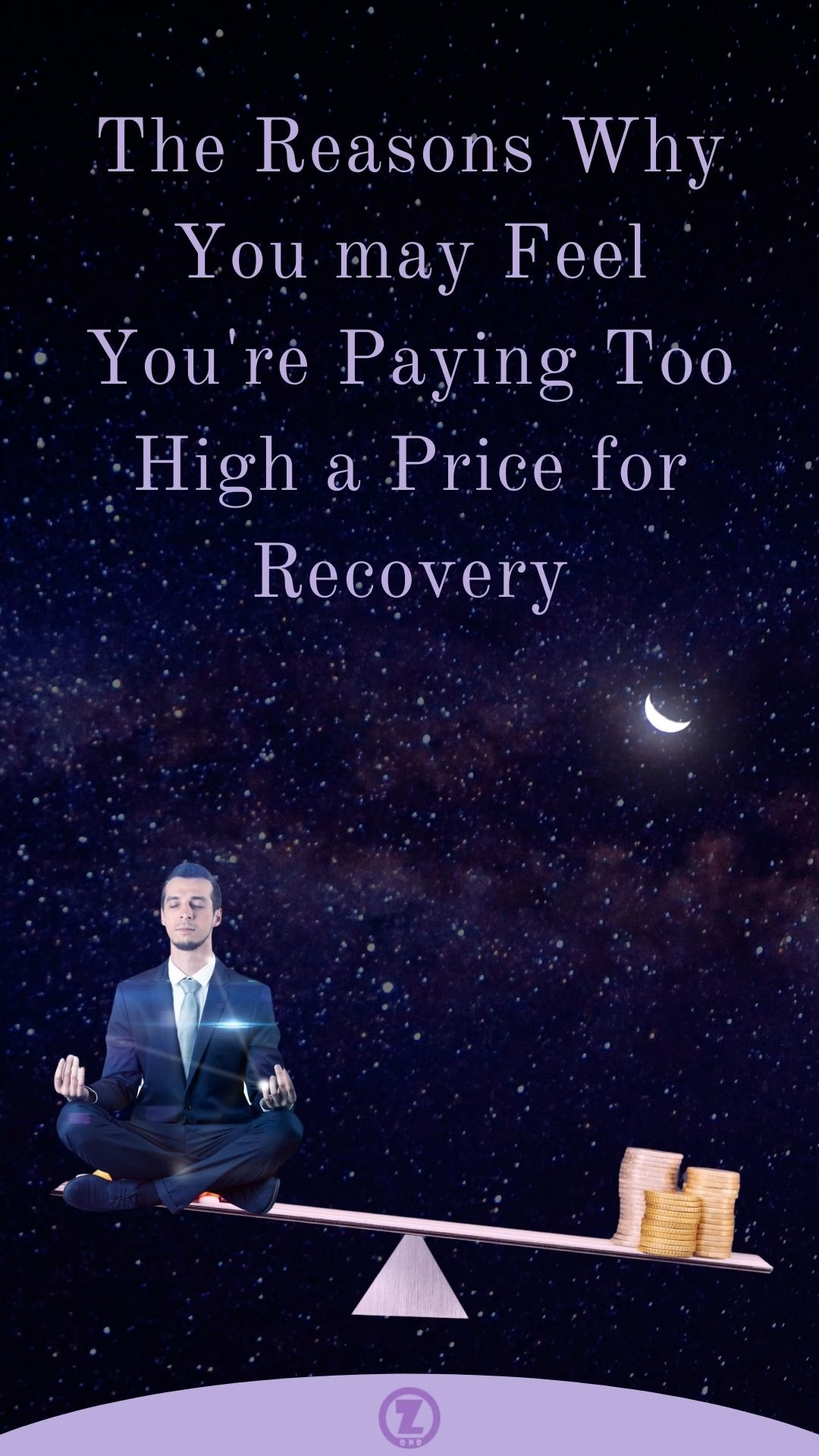
  • The Reasons Why You May Feel You’re Paying Too High a Price for Recovery – Step 1

    The Reasons Why You May Feel You’re Paying Too High a Price for Recovery – Step 1

    “Pain seems to be the price of admission, but we always seem to get many more rewards than we had hoped for or expected.” “This pain is the pain of building character. We no longer hide behind a cloud of smoke whenever life presents us with an opportunity for spiritual growth.” (Life with Hope, p. 35)

    Analysis of today’s Stress Free Zone

    Today’s SFZ delves into the emotional price and psychological challenges that often accompany recovery, particularly the perception that one is paying too high a price for healing. These reflections emphasize the unique, often painful, path each individual must walk—a notion supported by various thinkers and recovery literature.

    The passage from The Basic Text acknowledges that pain thresholds vary widely. Some individuals hit lower bottoms than others before seeking help, which aligns with Carl Jung’s idea that suffering is often the catalyst for transformation. Jung believed that pain, particularly emotional suffering, serves as a powerful motivator for self-realization and growth. Therefore, what might seem an unbearable price for one may be an essential crucible for another.

    Life with Hope reinforces the idea that pain isn’t merely a punishment or burden—it’s a tool for growth. The text declares that this is “the pain of building character,” echoing Viktor Frankl’s assertion that suffering can lead to meaning when it’s approached with purpose. Frankl, a Holocaust survivor and psychiatrist, argued that individuals can endure profound hardship if they perceive it as meaningful. In recovery, the pain is meaningful because it fosters resilience, accountability, and ultimately transformation.

    Paulo Coelho’s quote, “Wisdom is nothing more than healed pain,” encapsulates the cumulative insight gained from this process. Coelho’s words suggest that the price of pain yields long-term dividends—wisdom, humility, and spiritual depth.

    Ultimately, while recovery can feel costly, especially in emotional terms, these perspectives underscore that the process forges inner strength. The rewards—clarity, self-worth, and peace—far exceed the initial discomfort. Healing, as bell hooks wrote, is “an act of communion,” one that invites individuals to connect deeply with themselves and others, through and beyond their pain.

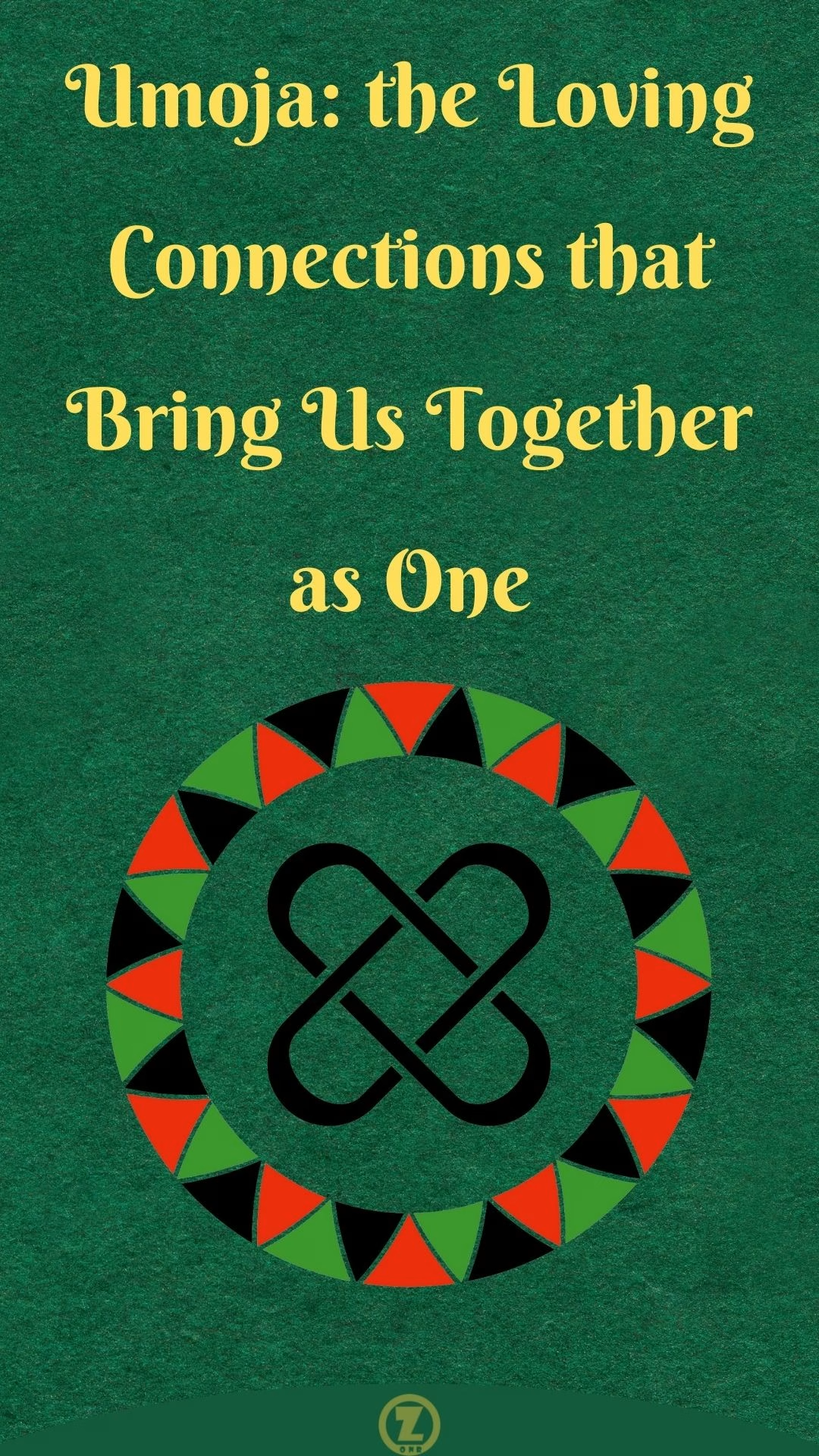
  • Umoja: the Loving Connections that Bring Us Together as One

    Umoja: the Loving Connections that Bring Us Together as One

    Analysis of today’s Stress Free Zone:

    Today’s SFZ explores the concept of Umoja—the Swahili word for unity—through the lens of mutual support, compassion, and shared responsibility. By highlighting how loving connections not only sustain individual recovery but also strengthen community bonds. The excerpt from How Al-Anon Works reminds us that healing often happens in the presence of simple, authentic connection. Whether through presence, a phone call, or a small gesture, these acts express love, solidarity, and hope. In this, we see echoes of psychologist Carl Rogers’ core belief: unconditional positive regard—the acceptance and presence of another—fosters growth and healing.

    The quote from Twelve Steps and Twelve Traditions deepens this message by shifting focus from self-centered needs to the healing power of giving. Choosing to comfort, understand, and forgive rather than receive these gifts reflects what philosopher Martin Buber describes as the “I-Thou” relationship—where we see others not as objects, but as sacred beings. This kind of presence transforms recovery from an individual journey into a collective experience of grace and responsibility.

    Alexander the Great’s quote reminds us that individual actions impact the collective. Unity, then, is not passive; it demands that we actively care for one another. In systems thinking, as author Peter Senge explores, the health of the whole depends on the contributions of each part. Recovery communities thrive not just because individuals heal, but because they choose to show up for each other.

    Ultimately, Umoja is more than a concept—it is a daily practice of love, presence, and shared humanity. Through connection, we become whole.

    Mobile Recovery Spiritual Solutions You Can Count ON!

  • Magnus: the Centaur

    Magnus: the Centaur

    Once upon a time, in a distant land, there lived a remarkable centaur named Magnus. He was known for his imposing figure and physical strength. But what truly set him apart was his compassionate heart and unwavering commitment. As the leader of his herd, Magnus faced a unique challenge: the struggle to tame the beast within.

    Magnus believed in the wisdom of creation. And understood that instincts were an integral part of being a complete being. He acknowledged that desires for intimacy, security, and companionship were natural and essential. However, he also recognized that if left unchecked, these desires could become enslaving forces that threatened the harmony for the upcoming Centaur Game.

    Guided by the words in today’s Stress Free Zone, “Compassion and Humanity for the Beast Within,” Magnus embarked on a personal journey to understand. And free himself from the elements of his nature that had the potential to control him. He realized that it was essential to examine his instincts, desires, motives, and tendencies that had kept him trapped in the grip of his own addictive patterns.

    With the wisdom of the herd’s collective experience, Magnus sought the guidance of his trusted advisors and mentors. Together, they delved into the depths of his being, exploring the origins of his beastial desires. And the compulsive routines that had threatened to overpower him. Through introspection and self-reflection. They unearthed the underlying causes and triggers, shining a light on the path towards liberation.

    They discovered that human nature, including Magnus’s own, was not inherently vicious. As Thomas Paine had wisely observed. Within every centaur, there lay a potential for goodness, empathy, and harmony. Magnus realized that he needed to embrace this truth and nurture it within himself.

    Armed with bows, arrows, self-awareness and an unwavering commitment to growth. He sounded the horn for the annaul Centaur Games to commence. However, this time he practiced mindfulness and sought balance, finding solace in meditation and the serenity of nature. Through these practices, he learned to harness his tremendous strength. Not just physically, but emotionally and mentally as well.

    Magnus tirelessly worked to channel his beastial desires into the throes of the games, employing his strength to protect and guide the games to thrive. Rather than succumbing to destructive tendencies, that turn the matches into bloodiest sport imaginable. Instead he became a beacon of compassion and humanity, leading by example and inspiring others to recognize and transcend their own inner struggles.

    Over time, Magnus’s herd thrived under his leadership. The bonds of camaraderie and understanding grew stronger. Fostering an environment of mutual support and respect. Magnus’s journey had not only transformed him. But also brought about a positive shift within the entire community.

    The tale of Magnus, the bracingly handsome centaur. Serves as a reminder that we all possess both light and darkness within us. It is through acknowledging and understanding our instincts, desires, and motives that we can harness their power for the greater good. By embracing compassion and humanity. We can free ourselves from the elements of our nature that seek to enslave us, and ultimately, create a more harmonious and balanced existence.

    Click here to receive your own free Zonr daily spiritual wellness solutions you can count on. And support the ATC!

  • Is It a Miracle?

    Is It a Miracle?

    Today’s Stress Free Zone highlight themes of spiritual growth, reliance on a higher power, and personal determination. As evidence of possible miracles in our lives. When we examine specific examples from world history. We can see how these themes have manifested and influenced significant events and individuals:

    • Miracle that moves the Earth: Throughout history, there have been instances where individuals possessed intuitive knowledge that guided them through perplexing situations. One notable example is the story of Sir Isaac Newton and his discovery of the laws of motion and gravity. Newton’s realization of the gravitational force, symbolized by the falling apple, is said to have come to him intuitively. This profound insight transformed our understanding of the universe. Similarly, in the field of science, numerous breakthroughs have occurred when researchers have had “eureka” moments. Or intuitive flashes that led to significant discoveries. These instances demonstrate how intuitive knowledge can enable individuals to handle previously baffling situations.
    • Miracles that move a person’s soul: The history of civil rights movements provides examples of individuals who overcame deep-rooted fears. And relied on a higher power to fight for justice and equality. One such figure is Martin Luther King Jr., who, in the face of immense adversity and violence, held steadfast to his vision of equality and freedom for African Americans. His faith in a loving God and his commitment to nonviolence. Allowed him to rise above fear and lead a powerful movement that changed the course of history. King’s ability to confront difficulties that seemed insurmountable. Was rooted in his deep spiritual beliefs and his trust in God’s guidance and support.

    • Miracles that move a nation felt around the world: Mark Twain’s notion that industry, application, and perseverance under a brave and determined spirit is evident in the life of Mahatma Gandhi. Gandhi’s unwavering commitment to nonviolent resistance. And his tireless efforts to fight for India’s independence exemplify the power of industry and perseverance. Through his application of nonviolent principles, Gandhi mobilized millions of people and successfully challenged British colonial rule. His actions demonstrated the transformative power of determination, discipline, and hard work, creating a profound impact on the world.

    These examples from world history illustrate how the themes expressed in the stanzas align with actual events and individuals. They exemplify how intuitive knowledge and personal determination have played pivotal roles in history. Whether it is the promise of staying sober, intuitive insights, overcoming fears, or uncommon perseverence. These individuals have been able to achieve remarkable feats that from a distance appear to be everyday miracles right before our eyes.

  • The Right Thing

    The Right Thing

    Once upon a time in 17th-century France, there lived a nobleman named Louis. Much like the esteemed French author and philosopher François duc de La Rochefoucauld. Louis faced momentous choices that tested his moral compass and challenged him to do what was right.

    Louis belonged to the prestigious aristocracy, surrounded by wealth, privilege, and societal expectations. However, deep within his heart, he felt a yearning for something greater. Inspired by the wisdom of Rochefoucauld’s writings. Louis sought to understand the complexities of human motives and the pursuit of true virtue.

    Each morning, as the sun cast its first rays upon his grand estate, Louis retreated to his study. He would sit in quiet contemplation, considering the day ahead. Before embarking on his noble endeavors, he followed the guidance found in today’s Stress Free Zone, seeking divine intervention. With sincerity and humility, he asked God to direct his thoughts, safeguarding them from self-pity, dishonesty, and self-seeking motives.

    One day, as Louis walked through the bustling streets of Paris, he witnessed a scene that would forever test his commitment to doing what was right. A poor beggar, shivering in the cold, stretched out his hand, pleading for a morsel of bread. The nobleman paused, torn between his societal obligations and the call of compassion within his heart.

    Remembering Rochefoucauld’s words about slipping back into old ways, Louis felt a surge of empathy. He realized that it was easy to ignore the suffering of others and succumb to the indifference that often characterized his privileged class. But he also recognized that true goodness required stepping beyond the confines of self-interest.

    With a determined spirit, Louis approached the beggar and offered him his own coat. Shielding the destitute man from the biting cold. In that moment, he experienced a profound sense of fulfillment, knowing that his actions were driven by genuine compassion and a desire to alleviate suffering.

    However, as news of Louis’ benevolent act spread throughout the city, he encountered skepticism and criticism. Some accused him of seeking recognition and praise for his good deeds. Others questioned his true motives, suspecting that he may have acted out of self-interest.

    Reflecting upon the stanza that suggested people would be ashamed if their motives were exposed, Louis felt a pang of doubt. He questioned whether his own intentions were truly pure or if he was unknowingly seeking validation and admiration.

    Overwhelmed by these thoughts, Louis sought solace in his faith. He turned to God, acknowledging his own human flaws and asking for guidance. In his prayers, he implored for the strength to keep his selfish motives at bay. Striving for a genuine desire to help others without seeking personal gain.

    As time passed, Louis continued to face moral dilemmas and challenges that tested his commitment to doing what was right. Yet, with each choice, he reminded himself of Rochefoucauld’s teachings and the transformative power of genuine virtue.

    Through perseverance and self-reflection, Louis discovered that his journey was not about perfection but about continual growth. He realized that true goodness could be achieved by aligning his actions with noble intentions. Even when doubts and temptations arose.

    In the end, Louis’ commitment to doing what was right left a lasting impact on the people around him. His acts of kindness and selflessness inspired others to question their own motives and strive for a higher standard of virtue. Louis became a beacon of hope in a society where self-interest often overshadowed genuine compassion.

    In the annals of history, Louis’ story echoed alongside Rochefoucauld’s. Reminding generations that the pursuit of true virtue required constant self-examination, humility, and a determined spirit to overcome the pitfalls of self-interest. His journey served as a testament to the transformative power of doing what’s right. Even when the motives behind our actions remain hidden.

    Click here to receive your own free Zonr daily spiritual wellness solutions you can count on. And support the ATC!
  • Alignment Btwn Good & Evil

    Alignment Btwn Good & Evil

    Today’s Stress-Free Zone discusses the recovery wellness concepts of spiritual alignment, the pursuit of good, and the struggle against evil. Let’s compare and contrast these ideas with the philosophies of Immanuel Kant and Friedrich Nietzsche, two renowned philosophers known for their distinct perspectives on morality and spiritual wellness.

    Immanuel Kant was an 18th-century German philosopher whose ethical theory emphasized reason and the pursuit of moral principles. Kant’s philosophy focused on moral duty and the importance of aligning one’s actions with universal moral laws. In the context of the quotes, Kant would argue that spiritual alignment involves aligning one’s will with the categorical imperative, which dictates that individuals should act only on principles that can be universally applied. For Kant, the pursuit of good means acting in accordance with moral duty, driven by reason rather than personal desires. The emphasis is on the importance of rationality and a sense of duty in achieving spiritual alignment.

    On the other hand, Friedrich Nietzsche was a 19th-century German philosopher known for his critique of traditional morality and his concept of the will to power. Nietzsche rejected the notion of objective morality and instead focused on individual agency and the pursuit of personal flourishing. In Nietzsche’s philosophy, good and evil are subjective constructs that vary based on individual perspectives and cultural influences. Nietzsche’s concept of spiritual alignment would involve individuals aligning themselves with their own will to power, embracing their unique desires, instincts, and creative potential. The pursuit of good, for Nietzsche, is an affirmation of life and a rejection of external moralities imposed by society or religion.

    In contrast to Kant and Nietzsche, Pythagoras, the ancient Greek philosopher, believed in the existence of objective moral principles and the need to cultivate the soul towards good. Pythagoras emphasized the importance of winning the soul over evil, suggesting a spiritual alignment that involves self-discipline, self-reflection, and the pursuit of moral virtue. Pythagoras believed that the soul, through self-examination and adherence to universal principles, can overcome base desires and align itself with higher ideals.

    While Kant’s philosophy centers on rationality and duty, Nietzsche’s focuses on individual will and personal flourishing, and Pythagoras’ emphasizes the pursuit of moral virtue, all three philosophers share a common interest in spiritual alignment and the pursuit of good. However, their approaches differ in terms of the sources of moral authority, the nature of good and evil, and the means of achieving spiritual alignment.

    In summary, Kant emphasizes reason and moral duty as the foundation for spiritual alignment and the pursuit of good. Nietzsche emphasizes individual agency and the affirmation of life as the basis for spiritual alignment and the pursuit of personal flourishing. Pythagoras highlights the cultivation of the soul and adherence to universal moral principles in the pursuit of good. Each philosopher presents a distinct perspective on spiritual wellness, morality, and the path to spiritual alignment, reflecting their unique philosophical frameworks and insights.